
 |
| Tibetan Farmhouse of Tibetan Grassland |
Introduction Lake Qinghai - Xining.
As the main part of Qinghai-Tibet Plateau, Tibet Autonomous Region owns an average altitude of more than 4000 meters, and is called as “the roof of the world”. According to its complax terrain, Tibet are divided into three natural areas. Northern Tibet Plateau, which occupies about two thirds of the Region, is located among Kunlun Mountain, Tanggula Mountain, Gangdise Mountain and Nyenchen Tanggula Mountain. Southern Tibet refers to the area between Gangdise Mountain and Himalayas, where Yarlung Tsangbu River and its tributaries flow by. Eastern Tibet is an area covers with series of high mountains and deep valleys firstly run from east to west and then run from south to north, which belongs to Hengduan Mountains.
Its landscape is dominated by high mountains, middle mountains, low mountains, hills, plains etc. Tibet is also covered by other landforms such as periglacial landform, karst landform, aeolian sand landform, volcanic landform and so on.Whenever you are in Xining don't ever miss to visit Qinghai Lake and the Tibetan highland plateau. I promise you will be amazed and in awe to drive through a vast highland plateau with pure green grassland in spring and brown grassland in summer. Snow-shrouded mountain along the way...and please believe me this is a rare sight in Northwestern China and not many know about this reality not even the Chinese from Beijing or Chengdu.
Qinghai Lake has long been one of the biggest draws in Xining, the capital of Qinghai Province which lies on the northeast of Tibetan Plateau. At an altitude of 3200 meters, Qinghai Lake boasts great charms – Blue sky and water, white clouds and green grassland, amazing rape flowers, a wonderful summer resort, and mesmerizing landscape
 |
| Cultivated Highland Tibetan Plateau. |
 |
| A Tibetan displaying a white Yak... {August ) is the best time to visit Qinghai Lake. September and early October are also good times to have a glimpse of the lake although most of the grasslands have turned brown. We travel by coach to Qinghai Lake. Basically, you have three ways of transport – taking a public bus, hiring an exclusive car or van, and taking a shared car or van. |
 |
| The Flowers of Qinghai Lake |
 |
| The Flowers of Qinghai Lake |
A private or shared car or van or coach gives you much freedom in terms of
getting off on the way to Qinghai Lake or back to Xining downtown. There
are quite a few scenic attractions and historical sites on the way to Qinghai
Lake. You can ask your driver to stop for the site you are interested in,
making your day trip more interesting and value-added.
 |
| Neat in rows - should be Tibetan attitude. |
Qinghai Lake is located 151 km west of Xining's city center. It is the largest
inland lake and saline lake as well in China with a circumference of 360 km
and an average depth of 21 meters. Qinghai Lake is formed by
Generally the 151 km overland ride is a scenic drive, passing by massive
valleys, alpine meadows, limpid rivers, historical sites and remote towns. Well,
follow me to drive into the wonderland of Qinghai Lake in late September. It
is just unbelievable..and this is not in Switzerland or the Alpen nation of
Europe. But right here in China.
 |
| That's Qinghai Lake. The 151km ride is mainly composed of three parts: Xining Downtown to Huangyuan County 50km; Huangyuan – Daotanghe Town 50 km and Daotanghe – Qinghai Lake 50 km. |
 |
| One of the Pavilions at Qinghai Lake. This is Bayi Passenger Transport Station which is located at Kangle on East Avenue, many public bus lines reach the bus station. You should get off at the station of Kangle for Bayi Passenger Bus Station. It is a comfortable drive from Xining to Huangyuan along an enclosed expressway. This is the toll gate for the expressway. |
 |
Appreciating the scenery and nature. |
.
The entrance to Dan Gaer Ancient Town
 |
Strong word - I think for those from Beijing and Shanghai Chinese. |
 |
| Lounge and smoking area--open air lounge Wide fields by the highway. Grape flowers are cash crops for the local farmers. The grape flower seeds are essential eating oils. The best time to see the rape flowers falls on July through August. Today we are lucky to catch the last hues of the rape flowers. Qinghai Lake is a well-developed scenic area rated as an AAAAA attraction, the highest grade by the China National Tourism Administration. Several areas by the lake are open to visitors: Erlangjian Area, Sand Island, Bird Island, and Fishing Harbor. We visit the lake at Fishing Harbor (entrance fee: RMB 40) instead of the most commercial and well-developed Erlangjian Area9 (Entrance fee: RMB 100 + RMB 140 for cruise on the lake). |
The rape flo
 |
| Caption of one the signage. |
After D
 |
| Various signage ,some with confusing meaning and directive. |
Qinghai L
TThe Snow capped mountains with reflections on the lake. Our driver gives us a
pleasant surprise by driving up to the hilltop south of Qinghai Lake, easy for
us to have a panoramic view of the mesmerizing lake. The hill dotted with
glazing sheep with the backdrop of Qinghai Lake.
 |
| Mock up of non-Muslim Tibetan ritual display. |
 |
| Near the entrance of Qinghai Lake- Food,souvenirs, rest room and others. |
Winding on the south of Tibet plateau, Himalayas consists of many parallel
mountains which run from east to west, and its main body are located at the
border where China, India and Nepal meet. It has a length of 2400 kilometers,
a width of 300 kilometers, and an altitude of more than 6000 meters. With an
altitude of 8844.43 meters, Mt. Everest is believed to be the world ’s highest
peak, and located at the border between China and Nepal. Within the area of
5000 square kilometers around Mt. Everest, there are 4 peaks with an
altitude of more than 8000 meters, and 38 peaks with an altitude of more
than 7000 meters.
 |
| Halal Food is available near Qinghai Lake. |
 |
| One on the halal restaurant near Qinghai Lake- managed by Tibetan Muslim. |
Qinghai Province, located in the middle of northwest of China, is famous for the Qinghai Lake, the largest inland salt lake in China. With an average altitude of more than 3000 meters and an area of 720,000 square kilometers, it lies in the northeast of the Qinghai-Tibet Plateau, and shares boundary with Tibet, Xinjiang, Gansu and Sichuan Provinces. Many lofty snow-covered mountains and source of major rivers in China can be found here, such as Kunlun Mountain, Qilian Mountain, Tanggula Mountain, Yellow River, Mekong etc. Sapphire-like lakes scatter on the lush ranch land. All of these create a land of marvel, mystery and diversity. The climate of the province is of typical highland and continental. Most of the province is dry and cold with long winters, short summers, frequent winds, long hours of sunshine, and great temperature differences between day and night. Qinghai is populated with multi-ethnic groups, including Hans, Tibetans, Huis, Tus, Salars, and Mongolians
 |
| The crystal blue -Lake Qinghai |
.
 |
| Tibetan people near lake Qinghai Lake |
Qinghai is well-known for its historic relics and nature landscapes. The traditional customs and olkways of the local ethnic groups have attracted thousands of tourists home and abroad. Famous scenic spots are Qinghai Lake, Taer Monastery, Qutan Temple etc.
 |
| The largest salt lake in China |
 |
| Scenic view of Lake Qinghai |
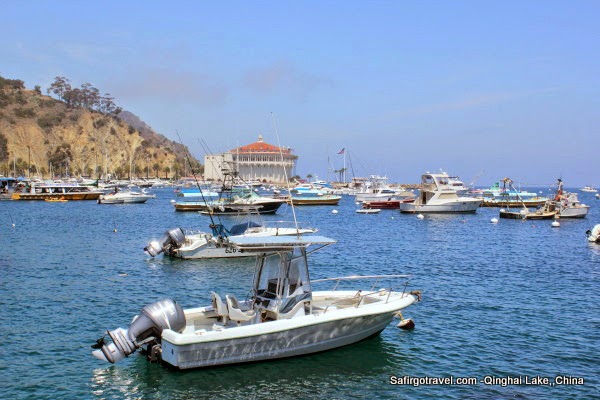 |
| Boats-big and small at Qing Hail Lake. |
 |
| Boat cruising Lake Qing Hai |
Qinghai
Lake is located 151 km west of Xining’s city center. It is the
largest inlandlake and saline lake as well in China with a
circumference of 360 km and average depth of 21 meters. Qinghai Lake
is formed byGenerally
the 151 km overland ride is a scenic drive, passing by massive
valleys, alpine meadows, limpid rivers, historical sites and remote
towns. Well, follow me to drive into the wonderland of Qinghai Lake
in late September. It is just unbelievable..and this is not in
Switzerland or the Alpen nation of Europe. But right here in Asia.
Qinghai is well-known for its historic relics and nature landscapes. The traditional customs and folkways of the local ethnic groups have attracted thousands of tourists home and abroad. Famous scenic spots are Qinghai Lake, Taer Monastery, Qutan Temple etc.
More Photos to see...
 |
| THE SILK ROAD - QINGHAI LAKE |


No comments:
Post a Comment